
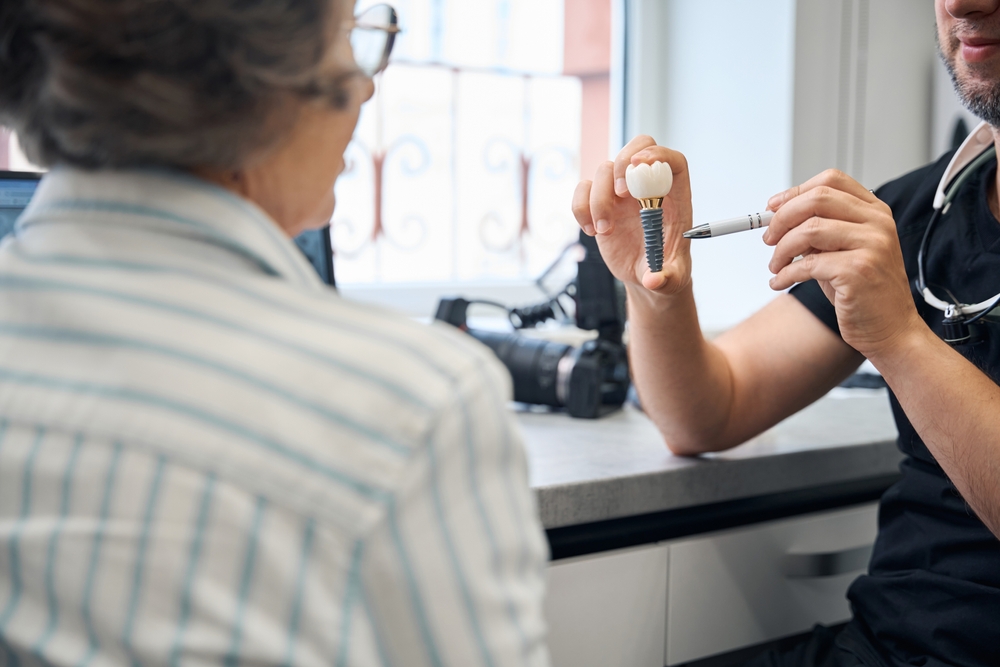
A full upper dental implant replaces an entire top row of teeth with implants and a fixed or removable prosthesis. This post is for people who have lost most or all upper teeth, wear unstable dentures, or want a long-term, natural-feeling solution. Read on to learn what a full upper dental implant is, who qualifies, the steps involved, recovery, risks, costs, and how to request a consultation for a full upper dental implant in Chaska, MN.
What is a full upper dental implant?
A full upper dental implant uses several dental implants placed in the jaw to support a complete arch of replacement teeth. Instead of a denture that sits on the gums, the implant-supported prosthesis is anchored to titanium posts. Options include fixed bridges, hybrid prostheses, or implant-retained dentures. A full upper dental implant offers better chewing, speech, and bone preservation than traditional dentures.
Who is a good candidate for a full upper dental implant?
Most adults missing most or all upper teeth and in generally good health can be considered for a full upper dental implant in Chaska, MN. Candidacy depends on several factors covered below.
Oral health and bone volume
Adequate bone in the upper jaw is needed to hold implants. If bone has shrunk after tooth loss, bone grafts or sinus lifts may be required before or during implant placement. A CBCT scan helps assess bone volume and plan treatment.
Medical history and lifestyle factors
Good overall health and controlled chronic conditions (like diabetes) improve success. Smoking slows healing and raises failure risk. Discuss medications, bleeding disorders, and past radiation to the head or neck with your dentist.
The full upper dental implant procedure: step-by-step
Consultation and CBCT planning
Initial visits include exam, X-rays, and a CBCT scan to map bone and vital structures. Digital planning determines implant number and locations for the best support and esthetics.
Implant placement and guided surgery
Implants are placed surgically—often using guided templates for precision. Some patients receive temporary teeth the same day while implants integrate. Procedures may use IV, oral, or nitrous sedation for comfort.
Healing, abutments, and final restoration
Healing takes months as implants fuse with bone. Abutments connect implants to the final prosthesis. Final restorations can be full-arch fixed bridges or removable implant-retained dentures, often made with CEREC or lab-fabricated materials.
Recovery and aftercare for a full upper dental implant
Pain management, diet, and activity
Expect swelling and mild to moderate discomfort for a few days. Soft foods are recommended initially. Follow prescribed pain control and avoid heavy exertion for several days.
Oral hygiene and follow-up visits
Keep the area clean with gentle rinses and targeted brushing. Regular follow-ups ensure healing and long-term success. Professional cleanings and home care are essential.
Risks, complications, and common questions
Possible complications and how they’re managed
Complications include infection, implant failure, sinus issues, or nerve irritation. Most are preventable or treatable with antibiotics, bone grafting, or implant revision. Careful planning reduces risks.
How long implants last and signs to watch for
With proper care, implants can last decades. Watch for mobility, persistent pain, swelling, or changes in bite, and contact your dentist promptly if these occur.
Costs and financing for a full upper dental implant in Chaska, MN
What affects cost (number of implants, bone grafts, restorations)
Price depends on implant number, need for bone grafts or sinus lifts, type of final prosthesis, and sedation. A single-arch implant restoration is more costly than a standard denture but offers greater function and durability.
Insurance, financing, and payment plan options
Some dental plans cover parts of treatment; many practices offer financing or payment plans. Ask about third-party lenders and in-office options to make a full upper dental implant in Chaska, MN manageable.
Why consider Relaxation Dentistry for a full upper dental implant?
Relaxation Dentistry brings advanced training and technology to implant care with a patient-first approach. Dr. Jenny Ruoho and Dr. Mike Rohlf combine extensive implant education with gentle care to plan predictable outcomes. Key technologies include CBCT imaging, guided implant surgery, CEREC same-day restorations, and multiple sedation options to keep you comfortable.
Comfort-focused amenities and sedation choices
The office offers spa-like comforts—lavender neck wraps, noise-reduction headphones—and IV, oral, or nitrous sedation, including CRNA-supported IV sedation when needed.
Next steps: how to schedule a consultation
What to bring to your visit and how to prepare
Bring a list of medications, dental records or recent X-rays if you have them, and notes about your goals. Expect a CBCT scan and a clear treatment plan with cost and timing options.
Simple CTA to request a consultation or call for a full upper dental implant in Chaska, MN
If you’re ready to explore a full upper dental implant in Chaska, MN, request a consultation online or call the office to discuss options, view before-and-after cases, and get a personalized plan.